
5 Early Signs of Vascular Disease You Should Never Ignore
Introduction
Your blood vessels play a vital role in carrying oxygen and nutrients throughout the body. When they become narrowed, blocked, or damaged, blood circulation is affected, increasing the risk of serious health problems. This condition is known as vascular disease and can affect the arteries or veins in different parts of the body.
The good news is that vascular disease often develops gradually, giving your body early warning signs before complications occur. Recognizing these symptoms and seeking timely medical care can help protect your health and improve treatment outcomes.
What Is Vascular Disease?
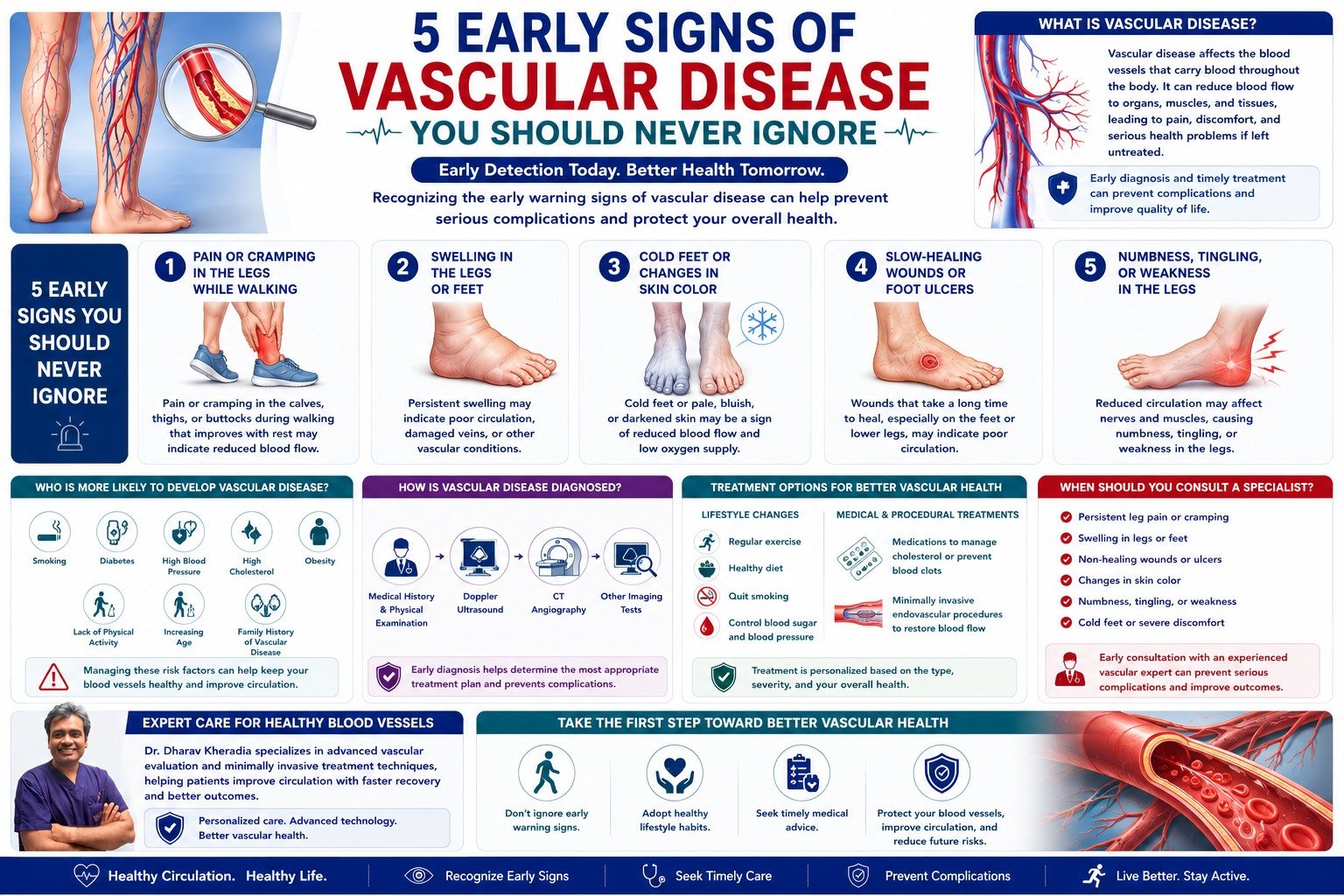
Vascular disease refers to conditions that affect the blood vessels responsible for carrying blood throughout the body. These conditions can reduce blood flow to important organs, muscles, and tissues, leading to discomfort and, if left untreated, more serious complications.
Healthy blood circulation is essential for keeping your heart, brain, and limbs functioning properly. When circulation is reduced, even simple daily activities may become difficult.
Why Early Detection Is Important?
Many people ignore the early signs of vascular disease because they develop slowly or seem minor at first. However, early diagnosis can help prevent complications such as chronic pain, non-healing wounds, stroke, or limb-threatening conditions.
Consulting a qualified vascular doctor at the first sign of circulation problems allows appropriate evaluation and timely treatment before the condition progresses.
5 Early Signs of Vascular Disease You Should Never Ignore
1. Pain or Cramping in the Legs While Walking
Pain, tightness, or cramping in the calves, thighs, or buttocks during walking that improves with rest may indicate reduced blood flow to the legs. This symptom, known as intermittent claudication, is one of the earliest warning signs of peripheral artery disease (PAD).
2. Swelling in the Legs or Feet
Occasional swelling after long hours of standing may be normal, but persistent swelling should not be ignored. It may indicate problems with blood circulation, damaged veins, or other vascular conditions that require medical evaluation.
3. Cold Feet or Changes in Skin Color
If one or both feet frequently feel cold, or if you notice pale, bluish, or darkened skin, reduced blood flow may be the reason. These changes occur when the tissues do not receive enough oxygen-rich blood.
4. Slow-Healing Wounds or Foot Ulcers
Cuts or sores that take a long time to heal, especially on the feet or lower legs, may be a sign of poor circulation. This symptom is particularly important for people with diabetes, as untreated wounds can lead to serious complications if blood flow remains restricted.
5. Numbness, Tingling, or Weakness in the Legs
Reduced circulation may affect the nerves and muscles, leading to numbness, tingling, or weakness in the legs. If these symptoms occur repeatedly or worsen over time, they should be evaluated by a healthcare professional.
Who Is More Likely to Develop Vascular Disease?
Several factors can increase the risk of vascular disease, including:
- Smoking
- Diabetes
- High blood pressure
- High cholesterol
- Obesity
- Lack of physical activity
- Increasing age
- Family history of vascular disease
Managing these risk factors can help maintain healthy blood vessels and improve circulation.
How Is Vascular Disease Diagnosed?
A detailed medical history and physical examination are usually the first steps in diagnosis. Depending on your symptoms, your doctor may recommend Doppler ultrasound, CT angiography, or other imaging tests to evaluate blood flow and identify narrowed or blocked blood vessels.
Early diagnosis helps determine the most appropriate treatment plan before complications develop
Treatment Options for Better Vascular Health
Treatment depends on the type and severity of vascular disease. In many cases, lifestyle changes such as regular exercise, a healthy diet, quitting smoking, and controlling blood sugar or blood pressure can improve circulation. Some patients may also benefit from medications to manage cholesterol or prevent blood clots. For more advanced conditions, minimally invasive endovascular procedures can restore blood flow with smaller incisions and faster recovery than traditional surgery.
When Should You Consult a Specialist?
If you experience persistent leg pain, swelling, non-healing wounds, or changes in skin color, do not wait for the symptoms to become severe. Consulting an experienced vascular expert can help identify the underlying cause and ensure timely treatment before complications arise.
Expert Care for Healthy Blood Vessels
Accurate diagnosis and individualized care are essential for managing vascular disease. Dr. Dharav Kheradia specializes in advanced vascular evaluation and minimally invasive treatment techniques, helping patients improve circulation while reducing recovery time whenever possible. His patient-focused approach ensures that treatment is tailored to each person’s specific condition and overall health.
Take the First Step Toward Better Vascular Health
The early signs of vascular disease are often easy to overlook, but paying attention to them can make a significant difference. Leg pain while walking, persistent swelling, cold feet, slow-healing wounds, and numbness should never be ignored. Seeking timely medical advice, adopting healthy lifestyle habits, and receiving appropriate treatment when needed can help protect your blood vessels, improve circulation, and reduce the risk of serious complications in the future.