
Surgery vs Embolization: What Women Should Know About Fibroids Treatment
Introduction
Uterine fibroids are one of the most common gynaecological conditions affecting women, especially during their reproductive years. While many fibroids remain small and symptom-free, others can lead to heavy bleeding, pelvic pain, and discomfort that affects daily life.
With advancements in medical care, women today have multiple options when it comes to managing fibroids. Understanding the difference between traditional surgery and minimally invasive techniques is essential when considering the most suitable uterine fibroids treatment for long-term relief and comfort.
What Are Uterine Fibroids?
Overview and Development
Uterine fibroids are non-cancerous growths that develop in or around the uterus. They vary in size and number, and their growth is often influenced by hormonal factors such as oestrogen.
Signs Your Body May Be Showing
While some women may not experience symptoms, others may notice:
- Heavy or prolonged menstrual bleeding
- Pelvic pressure or pain
- Frequent urination
- Difficulty with fertility in certain cases
When Do Fibroids Require Treatment?
Signs That Need Medical Attention
Fibroids require treatment when they begin to interfere with daily life, cause significant discomfort, or lead to complications like anaemia due to heavy bleeding
Impact on Quality of Life
Persistent symptoms can affect physical health, emotional well-being, and overall quality of life, making timely intervention important.
Treatment Options
Medical Management
In mild cases, medications may be used to manage symptoms such as pain or heavy bleeding. However, they do not eliminate fibroids permanently.
Advanced Treatment Approaches
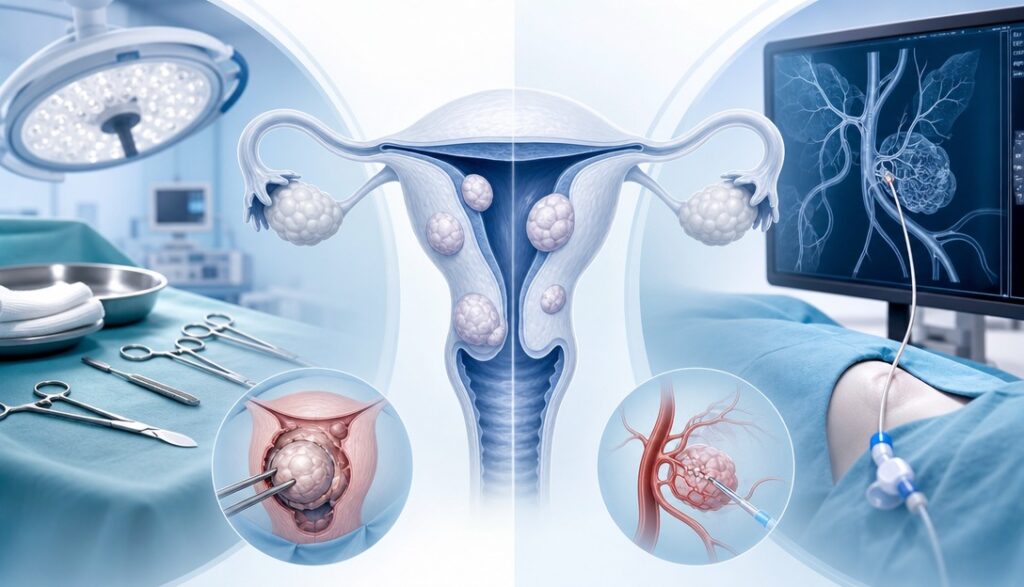
Modern uterine fibroids treatment includes both surgical and minimally invasive procedures, allowing patients to choose options based on their condition, age, and future fertility plans.
Surgical Treatment for Fibroids
Types of Surgery
- Myomectomy: Removal of fibroids while preserving the uterus
- Hysterectomy: Complete removal of the uterus, typically recommended in severe cases
Benefits and Limitations
Surgery can effectively remove fibroids, but it may involve longer recovery time, hospital stay, and potential surgical risks. In some cases, fibroids may recur after myomectomy.
Minimally Invasive Option: Uterine Fibroid Embolization (UFE)
What Is UFE?
Uterine fibroid embolization is a non-surgical, image-guided procedure that blocks the blood supply to fibroids, causing them to shrink over time.
How the Procedure Works
A small catheter is inserted through a tiny puncture, usually in the groin or wrist, and guided to the uterine arteries. Tiny particles are then released to cut off the blood flow to fibroids.
Who Can Benefit?
UFE is ideal for women seeking effective uterine fibroids treatment without undergoing major surgery, especially those who want quicker recovery and minimal disruption to daily life.
Surgery vs Embolization: Key Differences
Recovery and Comfort
Embolization typically involves shorter recovery time, minimal pain, and no large incisions, while surgery may require longer healing.
Risks and Outcomes
Both treatments are effective, but minimally invasive procedures often carry lower risk of complications and faster return to routine activities.
Lifestyle Considerations
The choice depends on factors such as symptom severity, overall health, and personal preferences regarding recovery and future fertility.
Advantages of Minimally Invasive Treatment
Minimally invasive techniques like embolization offer several benefits:
- No major surgical cuts or visible scars
- Shorter hospital stay or day-care procedure
- Faster return to normal activities
- Reduced post-procedure discomfort
These benefits make it an increasingly preferred uterine fibroids treatment option for many women.
Better Outcomes with the Right Decision
Each case of fibroids is unique, and treatment should be tailored based on the patient’s symptoms, age, and health goals.
Importance of Expert Guidance
Consulting an experienced specialist helps in understanding the most suitable treatment option. Experts like Dr. Dharav Kheradia focus on minimally invasive techniques and patient-centered care, guiding women toward safe and effective solutions with better recovery outcomes.
Warning Signs Not to Ignore
Heavy bleeding, persistent pelvic pain, or rapid increase in abdominal size should be evaluated promptly.
Early Evaluation Matters
Timely consultation ensures accurate diagnosis and access to the most appropriate uterine fibroids treatment before complications develop.
Making the Right Choice for Your Health
Understanding the differences between surgery and embolization empowers women to make informed decisions about their health. With modern advancements, effective and less invasive options are now available, offering relief with minimal disruption to daily life.
Choosing the right treatment at the right time can significantly improve quality of life and long-term well-being.