
Can Neck Swelling Be A Sign Of Thyroid Disease?
Introduction
Not every swelling in the neck is a cause for concern, but it should never be ignored. One of the common reasons for a lump or swelling in the front of the neck is a thyroid condition. In some people, the swelling develops slowly without causing pain, while in others it may be accompanied by difficulty swallowing, changes in the voice, or a feeling of pressure in the throat.
The thyroid gland plays an important role in regulating many body functions, including metabolism, energy production, and hormone balance. When the gland becomes enlarged or develops abnormalities, it may become visible as swelling in the neck. Knowing when to seek medical advice can help ensure early diagnosis and timely treatment.
Overview of the Thyroid Gland
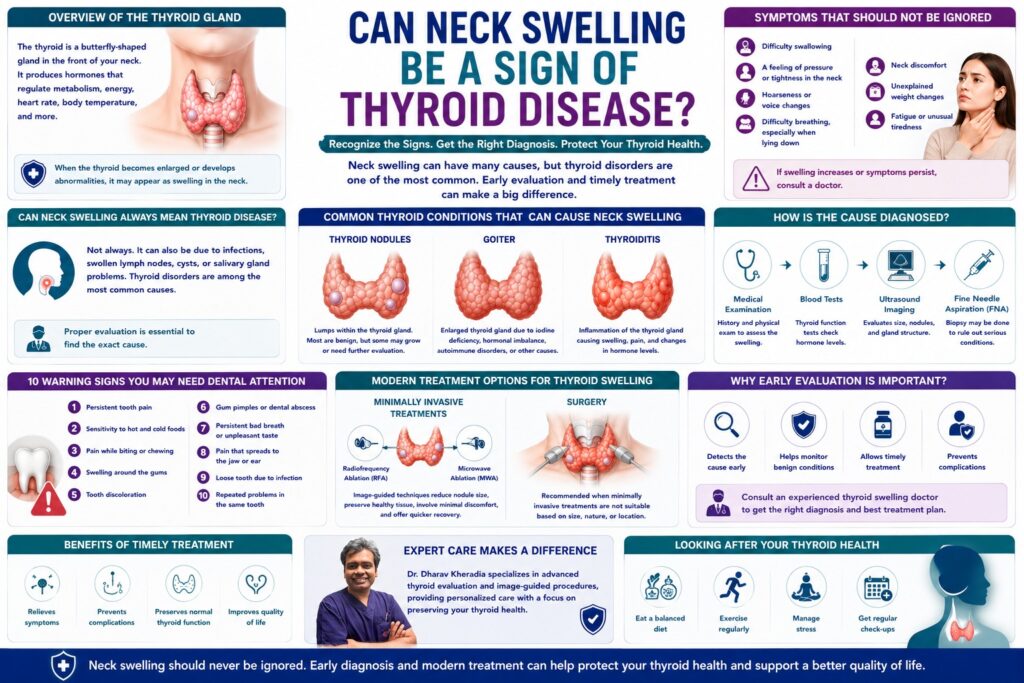
The thyroid is a small butterfly-shaped gland located at the front of the neck. Although it is small, it produces hormones that influence almost every organ in the body. These hormones help control heart rate, body temperature, digestion, and energy levels.
When the thyroid gland becomes enlarged or develops growths, the change is often noticeable as swelling in the neck. While many thyroid conditions are non-cancerous, proper evaluation is important to determine the exact cause.
Can Neck Swelling Always Mean Thyroid Disease?
Not necessarily. Neck swelling can occur for several reasons, including swollen lymph nodes, infections, cysts, or salivary gland problems. However, thyroid disorders are among the most common causes of swelling in the lower front part of the neck.
The swelling may appear gradually and remain stable for years, or it may slowly increase in size. The location, size, and associated symptoms often help doctors identify the underlying cause.
Common Thyroid Conditions That Can Cause Neck Swelling
Thyroid Nodules
A goiter refers to an enlarged thyroid gland. It may develop due to iodine deficiency, hormonal imbalance, autoimmune disorders, or other thyroid conditions. Some goiters remain small, while others become large enough to cause visible neck swelling.
Goiter
One of the most frequent causes of thyroid swelling is thyroid nodules. These are small or large lumps that develop within the thyroid gland. Most nodules are benign and do not cause serious health problems. However, some may continue to grow, produce symptoms, or require further investigation.
Thyroiditis
Inflammation of the thyroid gland can also lead to temporary swelling. Depending on the cause, it may be associated with pain, tenderness, or changes in thyroid hormone levels.
Symptoms That Should Not Be Ignored
Besides visible swelling, thyroid disease may produce other symptoms that indicate the need for medical evaluation.
These may include:
- Difficulty swallowing
- A feeling of pressure or tightness in the neck
- Hoarseness or voice changes
- Difficulty breathing, especially when lying down
- Neck discomfort
- Unexplained weight changes
- Fatigue or unusual tiredness
If the swelling increases in size or is associated with persistent symptoms, it is advisable to consult a healthcare professional.
How Is the Cause Diagnosed?
An accurate diagnosis helps determine whether the swelling requires observation or treatment.
Medical Examination
The doctor begins with a detailed medical history and physical examination to assess the size, location, and characteristics of the swelling.
Blood Tests
Thyroid function tests help evaluate whether the gland is producing normal hormone levels.
Ultrasound Imaging
Ultrasound is commonly used to examine the thyroid gland. It helps identify the size, number, and appearance of thyroid nodules while providing valuable information for treatment planning.
Fine Needle Aspiration (FNA)
If a thyroid nodule appears suspicious or meets certain criteria, a Fine Needle Aspiration biopsy may be recommended to examine the cells and rule out serious conditions.
When Does Thyroid Swelling Need Treatment?
Not every thyroid swelling requires immediate treatment. Small nodules that do not produce symptoms are often monitored through regular follow-up appointments.
Treatment may be recommended if:
- The swelling continues to increase in size.
- It causes difficulty swallowing or breathing.
- It affects the voice.
- The nodule shows suspicious findings on imaging or biopsy.
- Excess thyroid hormone production is present.
The choice of treatment depends on the diagnosis and the patient’s overall health.
Modern Treatment Options for Thyroid Swelling
Medical care has advanced significantly over the years, offering patients more options than traditional surgery alone.
For suitable patients, minimally invasive thyroid treatment techniques such as Radiofrequency Ablation (RFA) and Microwave Ablation (MWA) can effectively reduce the size of selected benign thyroid nodules without removing the thyroid gland. These image-guided procedures involve minimal discomfort, preserve healthy thyroid tissue, and usually allow a quicker recovery compared to conventional surgery.
When minimally invasive procedures are not appropriate, surgery may still be the best option depending on the size, nature, and location of the thyroid swelling.
Why Early Evaluation Is Important?
Many thyroid conditions respond well to treatment when diagnosed early. Ignoring persistent neck swelling may allow the condition to progress and increase the likelihood of complications.
If you notice a lump in your neck or experience ongoing throat discomfort, consulting a qualified thyroid swelling doctor can help identify the underlying cause and determine the most suitable management plan before symptoms worsen.
Expert Care Makes a Difference
Managing thyroid conditions requires careful evaluation and individualized treatment planning. Dr. Dharav Kheradia specializes in advanced thyroid evaluation and image-guided procedures, helping patients receive treatment based on their specific diagnosis rather than a one-size-fits-all approach. His focus is on selecting the most appropriate option while preserving normal thyroid function whenever possible.
Looking After Your Thyroid Health
Neck swelling does not always indicate thyroid disease, but it should never be overlooked. Early assessment allows doctors to identify the cause, monitor benign conditions, and recommend treatment when necessary.
With today’s advanced diagnostic methods and minimally invasive thyroid treatment options, many thyroid conditions can be managed safely and effectively. Paying attention to early symptoms and seeking timely medical advice can help protect your thyroid health and support a better quality of life.