
Why Do My Legs Swell?
10 Causes You Should Never Ignore
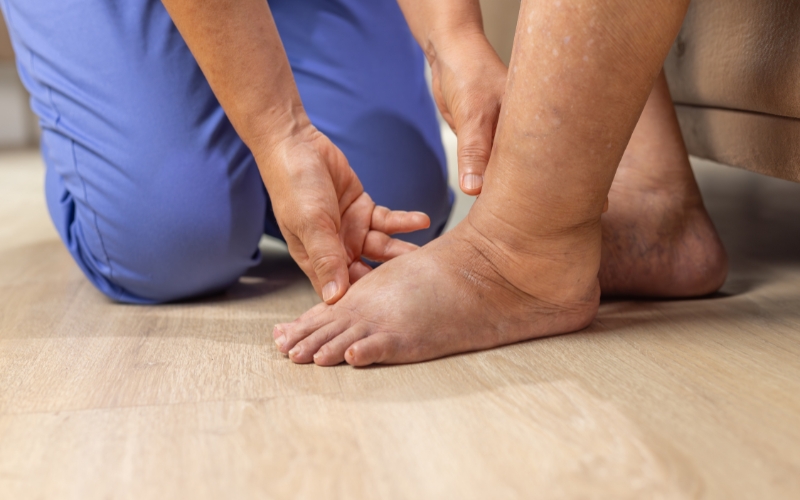
Leg Swelling Is Never "Just Normal"
You have noticed it before that heavy, tight feeling in your legs by the end of the day. Perhaps one ankle looks noticeably larger than the other, or your shoes feel uncomfortably snug by afternoon. Many people dismiss leg swelling as a minor inconvenience or simply blame it on long hours on their feet. But swollen legs are rarely without cause and sometimes that cause is serious.
Why So Many People Dismiss Swollen Legs And Why That's Risky
Leg swelling is one of the most under-reported symptoms in primary care. Patients often wait weeks or months before seeking help, assuming the swelling will resolve on its own. In many cases, that delay allows an underlying condition some of which are life-threatening to progress unchecked. Understanding what your body is signalling is the first and most important step.
How the Body Causes Leg Swelling: The Basic Mechanism
Leg swelling medically known as peripheral oedema occurs when excess fluid accumulates in the tissues of the lower limbs. This can happen when blood or lymphatic vessels fail to return fluid efficiently to the heart, when pressure inside veins becomes too high, or when the body retains fluid due to organ dysfunction. The result is the same: swelling, heaviness, and discomfort that worsens with time if left unaddressed.
Varicose Veins When Damaged Valves Cause Fluid to Pool:
How Faulty Vein Valves Lead to Swelling, Pain, and Skin Changes
Veins contain one-way valves that push blood upward toward the heart against gravity. When these valves weaken or fail, blood flows backward and pools in the lower leg a condition called chronic venous insufficiency. Over time, the increased pressure within the veins forces fluid out into surrounding tissue, causing swelling, skin discolouration, aching, and in advanced cases, venous ulcers that are slow to heal.
Why Varicose Vein Swelling Gets Worse by Evening?
Varicose vein swelling follows a predictable daily pattern: it is minimal in the morning after a night of lying flat, and progressively worsens as the day goes on and gravity continues to work against impaired veins. If your legs feel noticeably heavier and more swollen by evening, venous disease is a likely contributor and it is one that responds well to minimally invasive treatment.
Deep Vein Thrombosis (DVT) - The Swelling That Could Be a Clot
What a DVT Feels Like and Why It Is a Medical Emergency
Deep vein thrombosis occurs when a blood clot forms in one of the deep veins of the leg, most commonly in the calf or thigh. The affected leg may become swollen, warm to the touch, and painful particularly when standing or walking. In some cases, there are no symptoms at all. DVT is a medical emergency because the clot can break free and travel to the lungs, causing a pulmonary embolism a potentially fatal event that requires immediate treatment.
Who Is Most at Risk of Developing a DVT?
DVT risk is elevated in people who have recently undergone surgery or prolonged bed rest, taken long-haul flights, are pregnant, use hormonal contraceptives, have a history of clotting disorders, or have cancer. If your leg swelling appeared suddenly especially in one leg only and is accompanied by pain or skin redness, seek medical attention the same day.
Lymphedema - When the Lymphatic System Fails to Drain
Primary vs. Secondary Lymphedema: What Is the Difference?
The lymphatic system runs parallel to the blood vessels and is responsible for draining excess fluid from tissues back into circulation. When this system is damaged or underdeveloped, fluid accumulates a condition known as lymphedema. Primary lymphedema is caused by a developmental abnormality in the lymphatic vessels. Secondary lymphedema more common results from damage caused by cancer treatment, surgery, infection, or injury.
Why Lymphedema Swelling Feels Different From Vascular Swelling
Lymphedema produces a distinctive type of swelling typically firm, non-pitting, and affecting the entire limb rather than just the ankle or foot. Unlike venous swelling, it does not significantly improve with leg elevation overnight. The skin may feel tight and thickened over time, and the condition is chronic and progressive without proper management. Early diagnosis and specialist-guided treatment are essential.
Heart, Kidney, and Liver Conditions - Systemic Causes of Leg Swelling
Congestive Heart Failure: Why a Weak Heart Shows Up in Your Legs
When the heart is unable to pump blood efficiently, fluid backs up in the body’s venous system and leaks into surrounding tissue particularly in the lower limbs, where gravity pulls it. Bilateral leg swelling (both legs equally affected) that is worse in the evening, accompanied by breathlessness or fatigue, can be a sign of congestive heart failure. This is a serious condition requiring urgent cardiac evaluation.
Kidney Disease and Fluid Retention: The Protein-Loss Connection
The kidneys regulate fluid balance in the body. When they are damaged or failing, they may lose the ability to remove excess fluid leading to generalised swelling including in the legs. Kidney disease also causes loss of protein through urine, lowering the blood’s ability to retain fluid within vessels, which drives it into surrounding tissues.
Liver Disease and Leg Swelling: How Cirrhosis Disrupts Fluid Balance
The liver produces albumin a protein critical for maintaining fluid balance in the bloodstream. In liver disease such as cirrhosis, albumin production falls, fluid leaks out of blood vessels, and swelling accumulates in the legs and abdomen. Leg swelling in the context of jaundice, abdominal distension, or a history of liver disease warrants urgent investigation.
Other Common Causes of Leg Swelling You Should Know
Chronic Venous Insufficiency - Long-Term Poor Return Circulation
Beyond varicose veins, chronic venous insufficiency (CVI) is a broader condition where the veins of the leg are persistently unable to return blood efficiently. It causes sustained leg swelling, skin changes, and discomfort and is one of the most common vascular causes of leg oedema in adults over 50.
Medications That Cause Fluid Retention as a Side Effect
Several commonly prescribed medications list leg swelling as a known side effect. These include calcium channel blockers used for high blood pressure, corticosteroids, certain diabetes medications, hormone therapies, and non-steroidal anti-inflammatory drugs (NSAIDs). If your swelling began or worsened after starting a new medication, discuss it with your prescribing doctor do not stop medication without guidance.
Obesity, Pregnancy, and Prolonged Sitting or Standing
Excess body weight increases pressure on the leg veins and impairs lymphatic drainage. Pregnancy causes similar increased venous pressure, combined with hormonal changes that promote fluid retention. Prolonged sitting particularly during long flights or desk-based work and prolonged standing in occupations such as retail or healthcare both impair venous return and contribute to swelling over time.
Infection, Cellulitis, and Post-Surgical Swelling
Infections of the skin and soft tissue particularly cellulitis cause localised swelling, redness, warmth, and tenderness in the affected leg. Post-surgical swelling is expected after procedures on the legs, but persistent or worsening swelling following surgery should always be evaluated to rule out DVT or wound complications.
Warning Signs: When Leg Swelling Needs Urgent Medical Attention
Red Flag Symptoms That Means Go to the Doctor Today
Do not wait if your leg swelling is accompanied by any of the following:
- Sudden onset of swelling in one leg, especially with pain or warmth possible DVT
- Shortness of breath or chest pain alongside leg swelling possible pulmonary embolism
- Swelling with fever, redness, and heat possible infection or cellulitis
- Swelling following a leg injury possible fracture or haematoma
- Rapid worsening of swelling with breathlessness or fatigue possible heart failure
These symptoms require same-day or emergency medical evaluation.
Sudden vs. Gradual Swelling - Why the Timeline Matters
Sudden swelling particularly in one leg is more likely to indicate an acute problem such as DVT, infection, or acute venous obstruction. Gradual, progressive swelling in both legs is more consistent with chronic conditions such as venous insufficiency, heart failure, or kidney disease. Both deserve medical attention but sudden swelling should be treated as urgent until proven otherwise.
Sudden vs. Gradual Swelling - Why the Timeline Matters
Sudden swelling particularly in one leg is more likely to indicate an acute problem such as DVT, infection, or acute venous obstruction. Gradual, progressive swelling in both legs is more consistent with chronic conditions such as venous insufficiency, heart failure, or kidney disease. Both deserve medical attention but sudden swelling should be treated as urgent until proven otherwise.
How Doctors Diagnose the Cause of Leg Swelling?
Doppler Ultrasound: The Gold Standard for Vascular Leg Swelling
When a vascular cause of leg swelling is suspected, duplex Doppler ultrasound is the first-line diagnostic tool. This non-invasive imaging technique uses sound waves to visualise blood flow within the veins and arteries of the leg in real time identifying blood clots, venous reflux, valve incompetence, and arterial narrowing with high accuracy. It is painless, radiation-free, and provides immediate results that guide treatment planning.
Blood Tests, Physical Examination, and Imaging - What to Expect
A thorough diagnostic workup for leg swelling typically includes a detailed physical examination, blood tests to assess kidney function, liver function, protein levels, and inflammatory markers, and D-dimer testing when DVT is suspected. In complex cases, CT venography, MRI, or lymphoscintigraphy may be used to evaluate the deeper vascular and lymphatic anatomy.
Why Early Diagnosis Changes Treatment Outcomes
The earlier the cause of leg swelling is identified, the more treatment options are available and the better the outcomes. Untreated venous disease progresses to skin ulceration. Untreated DVT carries the risk of pulmonary embolism. Untreated heart or kidney failure worsens with time. Early diagnosis is not just about comfort it can be life-saving.
Treatment Paths Based on the Cause
Minimally Invasive Options for Varicose Veins and Venous Disease
The majority of venous causes of leg swelling including varicose veins and chronic venous insufficiency are now treated without major surgery. Endovenous laser ablation (EVLA), radiofrequency ablation (RFA), and ultrasound-guided foam sclerotherapy are outpatient procedures that seal or destroy faulty veins with minimal discomfort and rapid recovery. For DVT, catheter-directed thrombolysis can dissolve dangerous clots precisely and effectively without open surgery.
Do Not Wait on Swollen Legs
Key Takeaways: What Your Swollen Legs Might Be Telling You
Leg swelling is your body’s way of signalling that something in your circulatory, lymphatic, or organ system is not functioning as it should. It can stem from something as manageable as a medication side effect or something as serious as a blood clot or heart failure. The cause matters enormously. And the only way to know the cause is to seek a proper diagnosis.
When to Book a Vascular Consultation - And What to Expect
If your leg swelling is persistent, worsening, or accompanied by any of the warning signs described above, a consultation with a vascular specialist is the right next step. Your specialist will take a thorough history, perform a clinical examination, and arrange the appropriate investigations most commonly a Doppler ultrasound to identify the cause and recommend a targeted treatment plan.
Do not dismiss swollen legs as normal. Your body is asking for attention listen to it.