
The Future Clinic: Why Medicine Is Moving Toward Procedures Without Scalpels
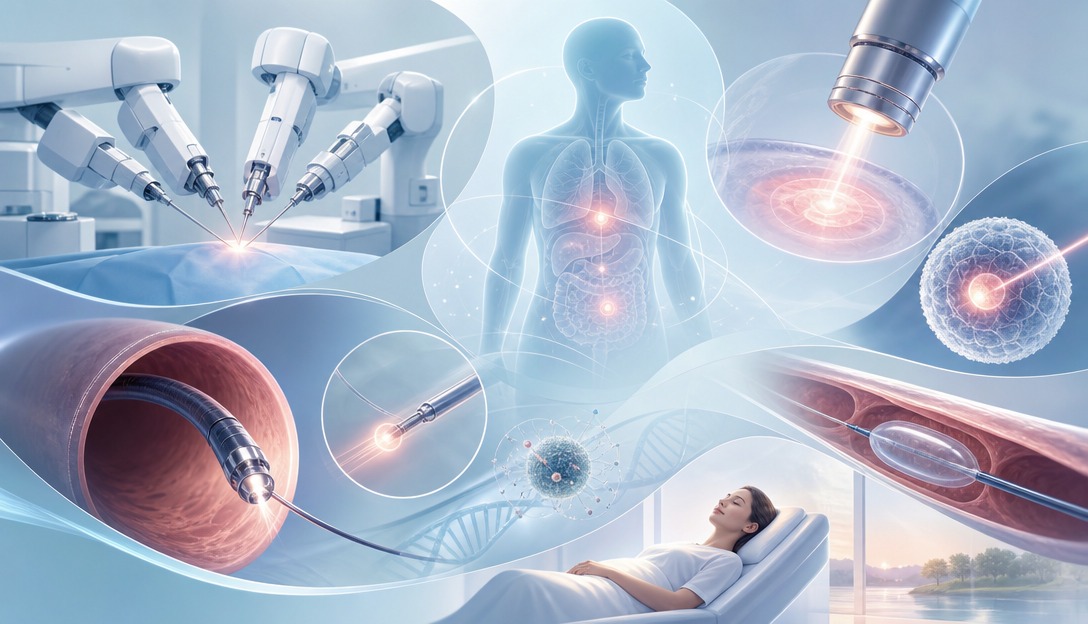
The Shift in Modern Medicine: From Operating Rooms to Catheter Labs
Healthcare has changed dramatically over the past few decades. What once required a full surgical suite, general anaesthesia, and weeks of recovery can now often be completed in under an hour with the patient walking out the same day. This transformation is not a future promise. It is happening right now, in hospitals and specialty clinics around the world.
What Does "Minimally Invasive" Actually Mean?
Minimally invasive medicine refers to procedures that treat disease or repair damage through the smallest possible entry points often just a needle puncture or a tiny incision no larger than a fingertip. Instead of opening the body wide, specialists guide thin, flexible tubes called catheters, along with miniature tools and cameras, directly to the site of the problem using real-time imaging.
How Vascular Medicine Led the No-Scalpel Revolution
Vascular specialists who treat blood vessels, arteries, and veins were among the earliest pioneers of minimally invasive care. Decades ago, treating a blocked artery or a dangerous aneurysm meant major open surgery. Today, these same conditions are routinely corrected through a catheter inserted into a vessel at the wrist or groin. Vascular medicine did not just adopt this movement; it helped build it.
What Are Minimally Invasive Vascular Procedures?
Understanding the Vascular System and Why It Needs Care
Your vascular system is your body’s highway network a vast web of arteries, veins, and capillaries that carries oxygen-rich blood to every organ and returns used blood back to the heart. When this system is disrupted by blockages, weak vessel walls, or dangerous clots, the consequences can be life-threatening: strokes, heart attacks, limb loss, or internal bleeding.
Common Vascular Conditions Now Treated Without Surgery
Several serious vascular conditions that once required open surgery are now managed through minimally invasive techniques, including:
- Peripheral artery disease (PAD) – Narrowing of arteries supplying the legs
- Aortic aneurysms – Dangerous bulges in the body’s largest artery
- Deep vein thrombosis (DVT) – Blood clots forming in deep leg veins
- Varicose veins – Swollen, twisted veins causing pain and complications
- Carotid artery disease – Narrowing of arteries supplying the brain
Breakthrough Procedures Replacing Open Vascular Surgery
Endovascular Aneurysm Repair (EVAR) - Fixing Aortic Aneurysms Through a Tiny Incision
An aortic aneurysm a balloon-like bulge in the aorta can be fatal if it ruptures. Traditionally, repair required open abdominal surgery with a large incision and months of recovery. EVAR allows surgeons to deliver a stent-graft through catheters inserted in the groin, reinforcing the weakened vessel wall from the inside, without ever opening the abdomen.
Angioplasty & Stenting - Opening Blocked Arteries Without Cutting
When an artery becomes narrowed or blocked by plaque, blood flow is dangerously reduced. Balloon angioplasty involves threading a catheter to the blockage, inflating a small balloon to widen the artery, and often placing a mesh stent to keep it open permanently. The entire procedure is performed through a puncture site smaller than a pencil tip.
Catheter-Directed Thrombolysis - Dissolving Blood Clots from the Inside
A blood clot lodged in a deep vein or artery can be deadly. Catheter-directed thrombolysis delivers clot-dissolving medication precisely at the site of the blockage through a thin catheter far more effective and targeted than systemic medication, and far less invasive than surgical clot removal.
Varicose Veins Ablation - No Stripping, No Stitches
Painful varicose veins were once treated by physically stripping the vein from the leg a painful, scarring procedure. Today, endovenous laser ablation (EVLA) and radiofrequency ablation (RFA) use heat energy delivered through a thin fibre to seal the vein shut from within. Patients walk in, walk out, and return to normal life within days.
Why Patients and Doctors Are Choosing These Procedures
Faster Recovery, Fewer Risks - The Clinical Advantages
The advantages of minimally invasive vascular procedures over open surgery are significant and well-documented:
- Shorter hospital stays – Many procedures require only one night stay.
- Reduced blood loss – Tiny access points means minimal surgical bleeding
- Lower infection risk – Smaller wounds heal faster and are less prone to complications
- Less postoperative pain – Patients report significantly lower pain scores
- Faster return to daily activities – Days to weeks rather than months
Real Patient Outcomes: What the Research Says
Clinical studies consistently support the shift toward minimally invasive vascular care. Large-scale trials comparing EVAR to open aneurysm surgery show significantly lower short-term mortality and complication rates with the endovascular approach. Similarly, patients undergoing angioplasty for peripheral artery disease report improved mobility and quality of life with fewer procedure-related risks compared to surgical bypass.
The Technology Powering Scalpel-Free Vascular Care
Image-Guided Interventions: The Role of X-Ray, Ultrasound & MRI
None of this would be possible without advanced real-time imaging. Fluoroscopy (live X-ray), duplex ultrasound, and MRI angiography allow vascular specialists to see inside blood vessels with remarkable precision guiding catheters, placing stents, and verifying results without ever needing to look directly at the vessel. The physician’s hands work outside the body while their tools work within.
Robotics and AI in Vascular Interventions What's Coming Next
The next frontier is already taking shape. Robotic-assisted catheter systems allow surgeons to control instruments with sub-millimetre accuracy, eliminating hand tremor and improving consistency. Artificial intelligence is being integrated into imaging platforms to detect vessel abnormalities faster than the human eye and to assist in real-time decision-making during procedures. The scalpel-free future is also becoming the robot-assisted future.
Is a Minimally Invasive Vascular Procedure Right for You?
Who Are the Right Candidates?
Minimally invasive vascular procedures are suitable for a wide range of patients, including many who are not candidates for open surgery due to age, heart conditions, or other health factors. Your vascular specialist will evaluate your overall health, the severity of your condition, and the anatomy of your vessels to determine the most appropriate treatment approach.
Questions to Ask Your Vascular Specialist
If you or a loved one has been diagnosed with a vascular condition, consider asking your doctor:
- Is a minimally invasive option available for my condition?
- What are the risks and benefits compared to open surgery?
- What does recovery look like, and when can I return to normal activity?
- How many of these procedures has your team performed?
- What imaging or diagnostic tests do I need before treatment?
The Future of Vascular Care Is Already Here
Medicine is no longer defined by the size of the incision. The future of vascular care is one where dangerous conditions are treated with precision, speed, and minimal disruption to the patient’s life. From dissolving clots with a catheter to sealing aneurysms without opening the abdomen, the no-scalpel revolution is not on the horizon it has already arrived. If you have a vascular condition, speak with a specialist today about whether a minimally invasive approach is right for you.